The Art of Working With Hiring Managers with Rachel Duran (Rosendin)

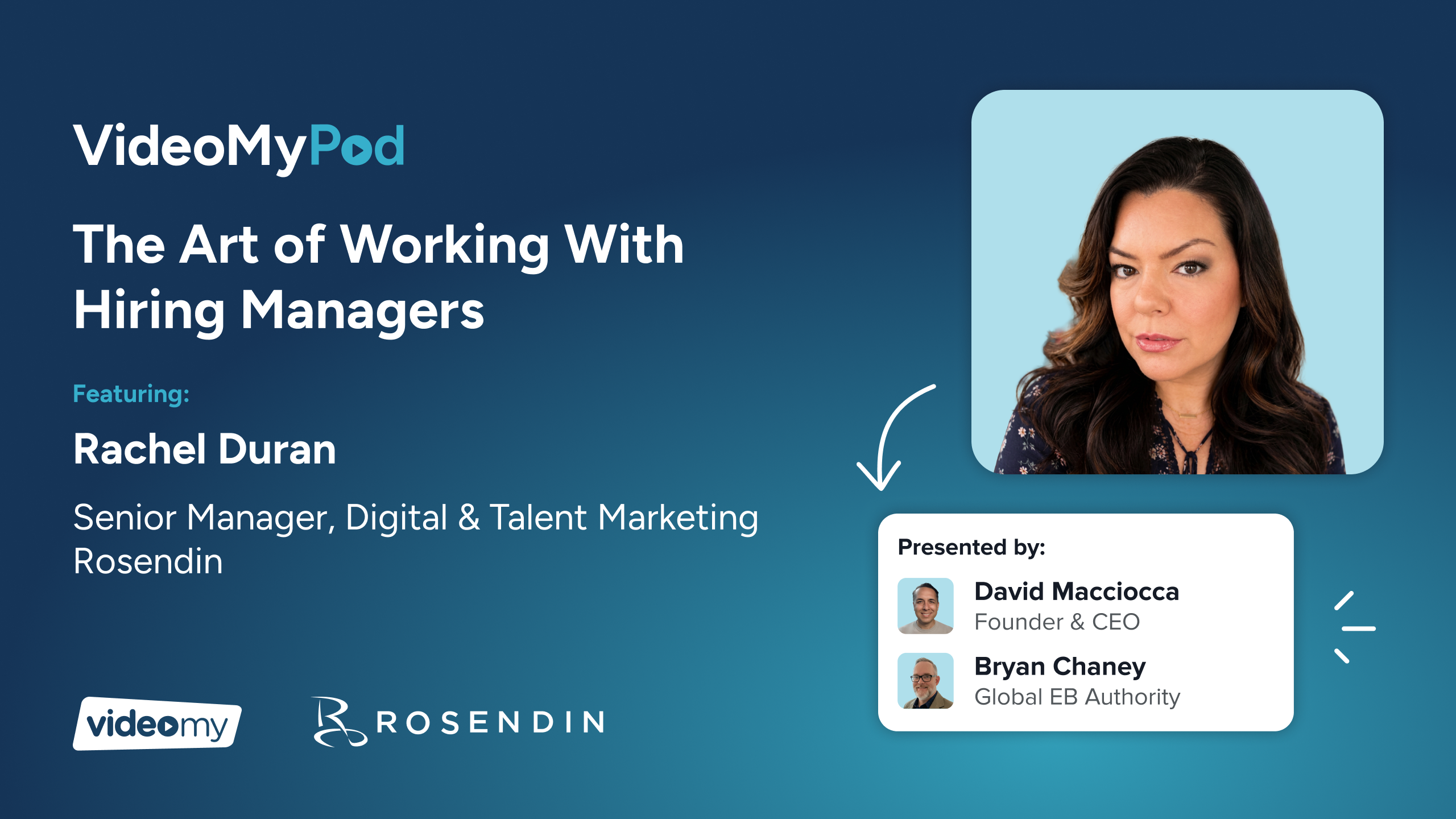
Rachel Duran has spent nearly 15 years in employer brand and recruitment marketing across RPOs, agencies and several Fortune 100 companies, and today leads employment marketing strategy at Rosendin Electric. On the VideoMy Pod, she shared how she works with hiring managers, and why the best partnerships start with the business problem rather than the creative idea.
Prove It or Lose Trust
Rachel has little patience for work that looks good but can't show value, a habit she traces back to her years as a retail store manager. "You have to be able to prove it. You have to have the numbers," she says. "You have to be able to build trust by being able to speak to the actual business impact."
Bring Talent Brand in When the Business Shifts
Talent brand matters most in the bigger moments: a new product, a hiring ramp or a role the talent map has flagged as hard to fill. "It becomes extremely important to speak to those different leaders and build that trust with them," she explains, so they know your process "is here to help them get the right talent in the door at a speed that they need."
Start With the Cost of Not Hiring
Before she spends any budget, Rachel steps back with the hiring manager: "What is the business impact of this need? What happens if we don't hire these people? Is there a dollar amount tied to that?"
That figure is what gets a CFO's attention. Engagement metrics won't. Instead, she says, you can tell them "we're at risk of losing a $1 million business opportunity if we don't have the software engineers to build this product by this date." From there she works backwards from hires to qualified applicants to reach, then to cost per hire, and compares it with what's at stake.
Never Say No, Say "Here's What I Can Do"
When a hiring manager asks for a huge digital billboard downtown, Rachel doesn't reject it. "I always start with that's interesting," she says. "I can't get you on the side of a building tomorrow. If we have to fill these roles in the next 60 days, here's what I can do right now."
That means email templates, SMS campaigns and talent pools she can switch on straight away while she prices up the bigger idea. "That way I'm not telling them no. I'm not telling them their idea's crazy."
Build a LEGO Box of Content
Responding fast depends on preparing ahead, which Rachel calls a "CMS mindset." Every employee interview uses a core set of questions about location, team and projects, and the footage is tagged like candidates in a talent pool. "What are the LEGO pieces that I can put together to make it represent this need?" Clips then go straight into emails and job descriptions, so "you're not starting from scratch with every different hiring ramp."
Match the Call to Action to the KPI
Rachel makes sure everyone agrees on what success means, and on where it can actually be measured. "Some people will say, 'Oh, quality of hire.' Great. Where is this report?" Her rule: "Your call to action that you're asking people to do when you pay money to put that content in front of them better be an action that matches back to a KPI that everyone agreed was solving the problem."
Play the Long Game
Her advice for struggling talent branders: know what you can deliver tomorrow, and work on the bigger plans alongside it. That trust matters most "when hiring goes down and you need to be able to present your value."
🎥 Watch on YouTube
🎧 Listen on Spotify