ERG Coffee Chats: Building A Human Hiring Experience with Ankit Pathak (Abbvie)

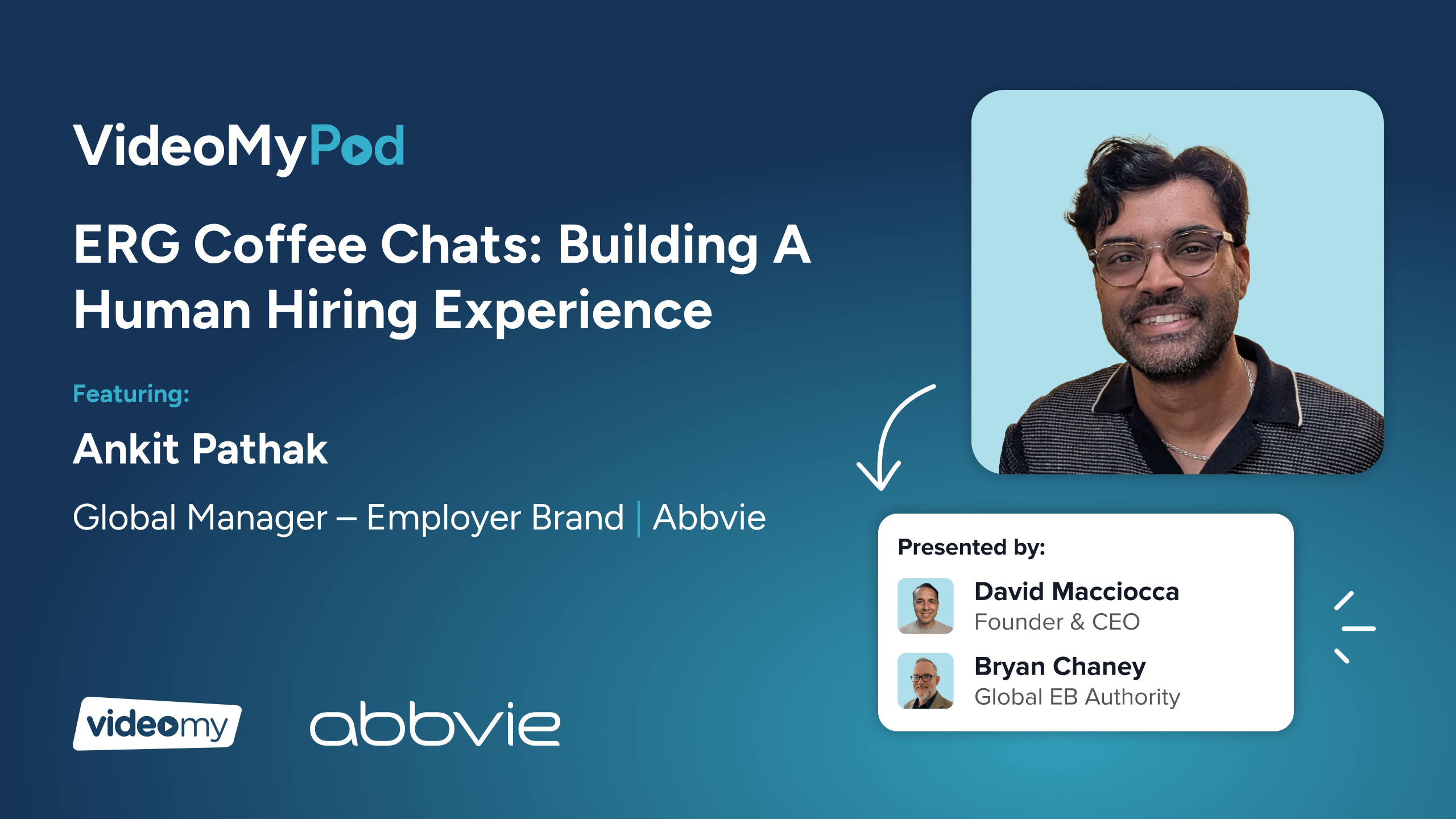
Ankit Pathak started his career in agency recruiting, placing Python developers and software engineers with Chicago's financial services firms. He soon realised the commission side wasn't for him, and he has spent the decade since in employer brand and recruitment marketing. On the VideoMy Pod, Ankit shared one of the most interesting candidate experience programs we've heard of: optional coffee chats between candidates and employee resource group (ERG) members.
What Recruiters Need to Relearn
Two years of negotiating hourly rates taught Ankit a lesson he later had to unlearn. Pay matters, but it isn't what drives most people. "They care about what they're going to do and what the problems are going to solve," he says. "They still want their worth, but I've had to constantly remind myself of that."
What an ERG Can Tell a Candidate That a Recruiter Can't
Ask Ankit what an ERG member offers a candidate and he answers in two words: "The truth."
ERG members already work at the company, and they aren't on the interview panel. "The candidate doesn't feel like they have to sell themselves or convince this ERG person," Ankit explains. Feedback showed exactly that: "I didn't have to prep and get ready. I didn't feel like it was a test... I got some really honest answers from human beings who are doing the work at this company right now."
Building the Program From a Coffee
Ankit sat on the talent acquisition leadership team at an 800-person mental health startup and worked closely with the senior director of DE&I. He took an idea to them and suggested starting small: "Let's pilot it. Let's see what our ERG leaders feel. Let's see what candidates feel early on and then let's see how we can actually operationalise this."
The program became known as D&I Coffee Chats. After the first interview, which was always with the hiring manager, candidates received a two-page PDF listing the company's eight to ten ERGs, and they could choose to meet any of them. It was never required. "It was all the candidate's decision," Ankit says.
To protect candidates, any ERG member on that candidate's interview panel was taken off the menu. Nobody wanted it "to feel like a back channel."
The Results
Over 12 to 18 months, the program gathered about 180 survey responses. The candidate NPS was +80. "I didn't fudge them," Ankit laughs. Even candidates who didn't get the job came away with a positive view of the company.
He's honest about what he would measure next time: conversion rates, which ERGs candidates chose most often, and how the ERG volunteers felt about taking part.
The best result didn't show up in a spreadsheet. Months later, Ankit ran into a new hire in the office kitchen whom he'd met through a coffee chat. "She was like, I just want you to know like that meant a lot to me," he recalls. It helped her through her first 90 days. "It wasn't about the NPS. It was just like two people feeling like, okay, we can let our guards down."
Where to Start
Ankit's advice for anyone who wants to try this is to find a colleague who will say "yes, and" to your idea and brainstorm with you. Then call it a pilot. "That takes away all the expectation for what the program could be." Tech stack and recruiting ops matter, he says, but relationships come first.
"It's all human touch at the end of the day," he says. "We want people to be connected to some type of story, and the most powerful one we have is the one that we know the best."
🎥 Watch on YouTube
🎧 Listen on Spotify