Taking Your Employer Brand Off the Shelf and Into the World with Amy Miller

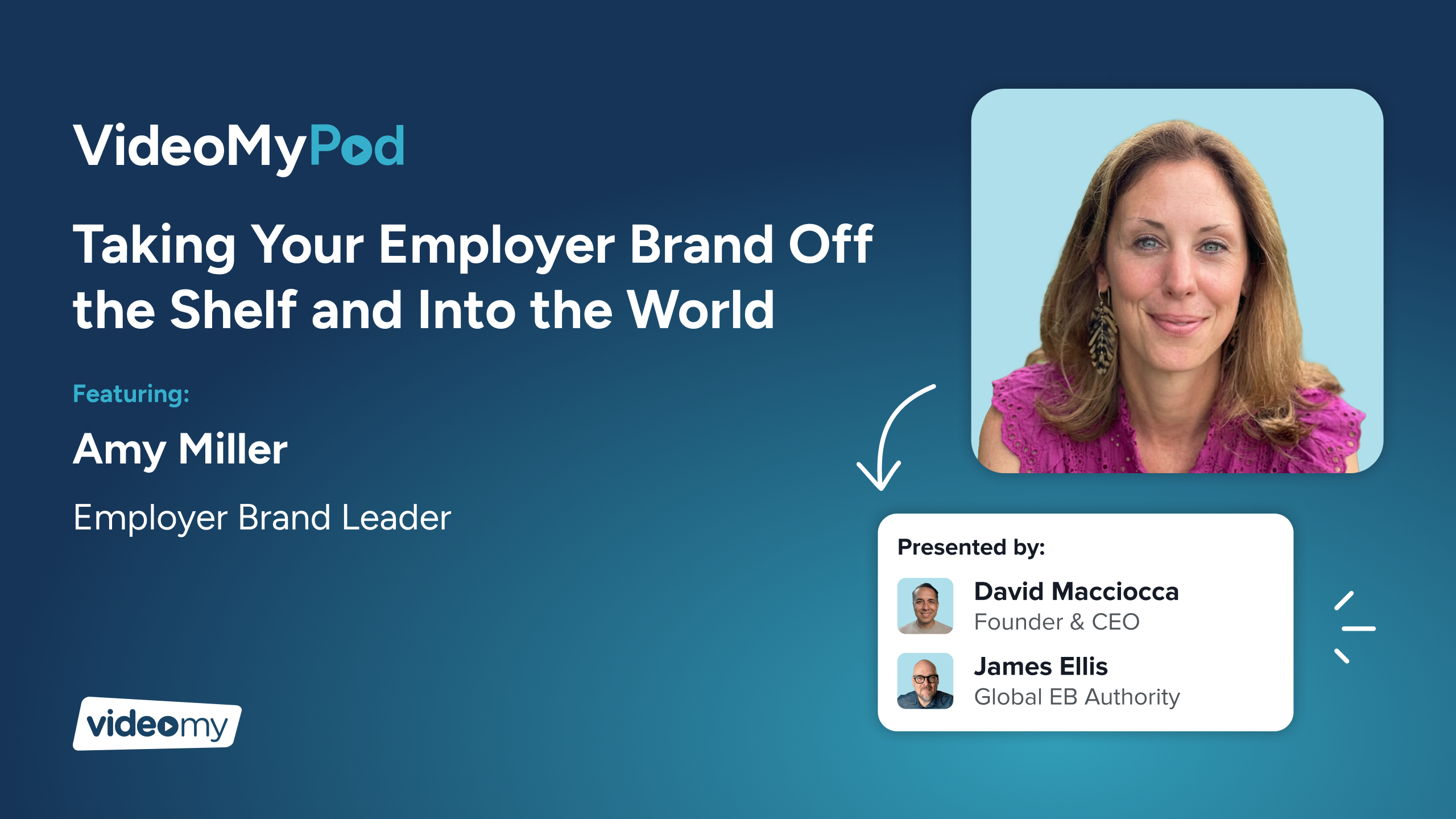
Amy Miller has spent the last decade building employer brands for insurance and financial services companies. She's seen campaigns with beautiful budgets fail spectacularly, and scrappy internal-first strategies exceed every expectation. The difference? Where you start. Amy's core principle: activate internally first, prove it works with your own people, then scale externally.
The Biggest Mistake Happens Before You Launch
"As employer brand professionals, we're so eager to make sure that our messaging is correct and our pillars resonate, but oftentimes we forget to bring in those key stakeholders from the very beginning," Amy says. The pattern is predictable: employer branders develop an EVP, feel good about it, then present it to leadership expecting applause. Instead: "What are we doing? Why are we changing our pillars?"
The fix requires flipping the timeline. Stakeholders, especially those who've bought into the current narrative, need to be part of the journey from day one. Amy learned this at Discover when they refreshed their EVP. "It wasn't really changing our pillars. We were keeping the same themes, but the elements, the drivers, the behaviours that are more important to both external and internal candidates have changed and evolved."
Your Employees Are Your Strongest Advocates
Internal activation isn't a step. It's the foundation. "Our employees know the reality of working at the company. They are their strongest voices. They're going to be better than any platform, any ad campaign that we run," Amy explains. So why do so many employer brands skip straight to external content?
Part of it is timeline pressure. Part of it is budget allocation. But Amy's learned that when employees aren't bought in first, external campaigns feel hollow. "They want it to be truthful and honest and authentic. If it's not, candidates see right through it."
Finding Your Advocates Early
The recruitment part of activation happens before anyone realises they're being recruited. "We're recruiting from the get-go. They just don't know it," Amy says. During EVP development, employer branders conduct focus groups, interviews, surveys and engaged people with strong opinions should be kept in the back pocket.
These become your employee advocates. They've been on the journey and they understand the pillars. They believe in the message because they helped shape it.
The Playbook Is Everything
Amy's playbook has layers. The master playbook communicates to vendors, the consumer brand team, and internal agencies. But then she segments it. Recruiters get a recruiter playbook with talking points. Leaders get a leader playbook. ERGs get the themes without the script, because you don't want them reading from a page, you want their authentic voice.
The playbook should include themes, pillars, rally cry, creative guidelines, talent segment deep-dives and recruiter talking points. It's comprehensive, but then weaponised differently depending on who's using it.
ERGs: Your Secret Weapon for Diversity and Authenticity
ERGs aren't just employee communities, they're authentic representation centres. "You have to show what your community looks like and hopefully that community is diverse," Amy says. "You want your audience internally to reflect the world outside."
But approaching ERGs requires relationship first. "It's really important to build relationships across the organisation," Amy emphasises. She belongs to a few ERGs herself, and her team members belong to others. When an employer branding initiative launches, these relationships unlock access, credibility, and authentic voices.
Amy never shows ERGs the full playbook. "We're not going to do a deep dive with them. They don't need to know that. And we don't want them to know that because we don't want them to take that and read it as a script." Instead, share overarching themes and let them amplify through their own voice.
The Power of Long-Form Content at Scale
When Amy's team had limited resources, she invested in long-form content such as blogs and videos, then extracted nuggets for social, job postings, ads and events. One leader interview becomes five assets. One employee story becomes ten. Scale without proportional budget increase.
The authenticity matters more than polish. "We had employees do podcasts and we selected employees to do things with the Guardian, so we put you know taking that content and repurposing it for creative advertising campaigns or event content," Amy explains. The content is born authentic, stays authentic through all formats.
Measuring What Matters
Amy watches engagement and candidate journey post-click. Does the message land? Do they bounce? Do they click through to the landing page? Does candidate journey data show behavioral signals that match the promise?
She also monitors job board metrics, Glass Door sentiment, and media performance. But the deepest signal is internal: "If you don't activate it internally and people adopt it and start engaging with it embracing it and start speaking the language and those values it will never be successful externally."
🎥 Watch on YouTube
🎧 Listen on Spotify