Making The Jump From Recruitment To Employer Brand with Max Darby (Hilti)

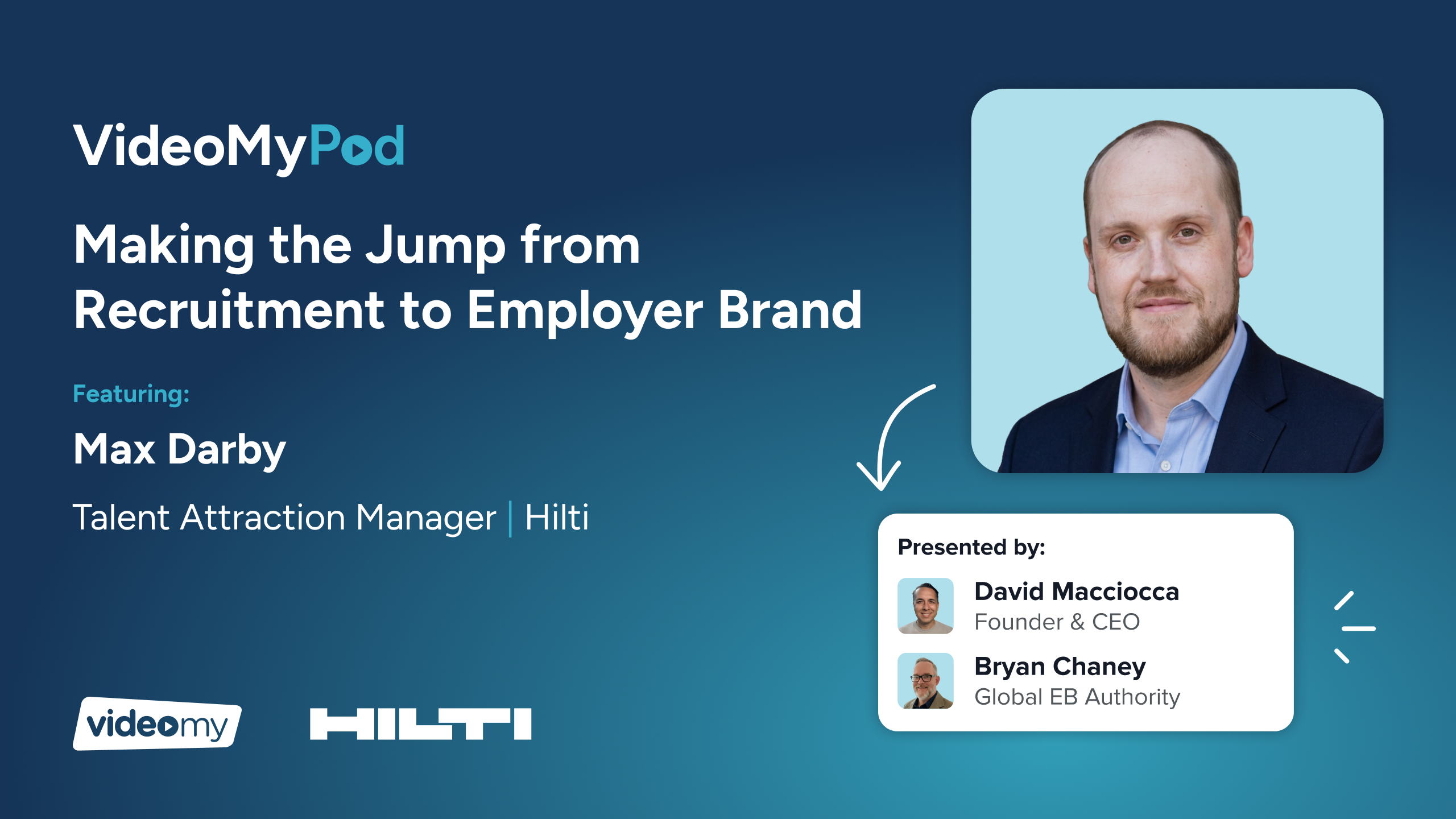
Max Darby didn't plan to become an employer brander. For 12 years, he was a recruiter, first in aerospace and defense across the UK, then internal at Hilti, then leading their global employer brand efforts. Three years ago, he moved to North America to rebuild their regional function. The transition from filling individual requisitions to building strategic talent narratives taught him that the same curiosity that makes great recruiters becomes the superpower in employer branding – understanding what makes people tick.
The Accident That Became a Career
Max's employer brand origin story started by accident. "When you're an agency recruiter competing with five to 10 different agencies for the same role, you have to get a little bit creative," he explains. "I started building a LinkedIn network, posting funny images and GIFs, advertising the role through social media."
In a niche field like aerospace, military and defense, traditional recruiting wasn't working. Max needed to stand out. One moment crystallised the potential: "I posted honestly on LinkedIn saying I need help. I am not a pilot. If you happen to be a pilot, let me know. And I filled this role."
That moment clicked. There was something behind social media, networking and storytelling. When Max moved internal to Hilti, the company wasn't using social media at all. He began doing what came naturally, posting branded content ad creating targeted messages. Leadership noticed. "There's something here and this guy is the only guy that seems to be doing it, so let's just try it."
The Moment Curiosity Shifted to Why
The real pivot came when Max noticed a data anomaly. One salesperson role got 100 applications in 24 hours. Another got two. "I remember thinking, what is it that makes one role get 100 applications and one role not?"
Max obsessed over it. "I looked at the profile, the time of day I posted the role, the wording of the advertisement. I started digging, and I felt more and more curious about the mindset of the candidate I was trying to get into, and what would be appealing and what wouldn't."
His boss probably thought he was wasting time. But Max was teaching himself the employer brand fundamentals. "I just find the whole topic like a puzzle. I'm so curious about just solving problems and using data to kind of understand the why behind things."
The Recruiter Superpowers That Transfer
Co-host Bryan Chaney identifies the recruiter advantage: "Recruiters do this really well – qualifying a requisition. You're sitting with hiring managers, figuring out what they're looking for, the skills they need, the soft skills. Then you lean on that to figure out how to find this specific person."
Max agrees. "That piece transfers really well to employer brand. It's just on a slightly larger scale. It's not how do I find this one profile for this one requisition. It's how do I appeal to the masses of people that we would want to join this organisation."
The translation: move from persona-specific hiring to persona-based messaging at scale. Recruiters already do this analysis. In employer branding, they just think about it differently.
The Recruiter Instinct to Unlearn
Max had to shed the transactional mindset. "A recruiter's mindset is very transactional. I have this role, move on to the next. Got to fill it. How do I convince this specific person to take this specific role?" Employer branding is the opposite: "It's persona-based. It's a much wider audience. How do I think strategically to appeal to the masses to almost fill roles that don't exist a year down the road?"
Things move slower in employer brand. "It's more how do I convince the boardroom and our stakeholders that this AI platform is the next big thing and this is why we should be focused on it," Max says. You're selling a three-year vision, not a job posting.
The Marketing Skills Recruiters Don't Have
Max's biggest learning curve: "We are marketers and therefore we follow marketing principles. We follow the marketing funnel. We have to learn analytics and SEO and GEO. I didn't know any of this moving in."
He learned on the job. Some self-taught, some online courses, some from collaborating with the consumer marketing side of the organisation. "Without the marketing piece, I think we really struggle," Max says. "Marketing and the principles of marketing was something I had no idea about moving into this role."
For recruiters pivoting to employer brand, this is the investment to make: learn marketing fundamentals, analytics, SEO. It's not optional.
The Promise Must Be Authentic
Max uses a clear test: "If we're going to ask those questions, we have to be ready for an answer we don't want to hear." When you audit whether employees think the EVP matches reality, sometimes they don't. "There is no point dressing up on our careers website or on our social channels what we believe the business to be. It has to be the authentic experience and this is what we can offer you."
He learned this through data. "I would conduct surveys and I would ask: Is the experience you've had at this organisation aligned to what you heard from us prior to joining?" Misalignment appears in metrics: retention drops, time to hire increases, Glassdoor sentiment declines. But the signal comes first from asking.
Advice for Recruiters Making the Jump
"Be curious. If you're not curious on the why then it may not be the role for you. The landscape is changing by the day." Max also values relationships and partnership skills, which recruiters already have. "You have to sit in meetings, understand what the business needs, when they need it."
For Max, the biggest advice: "Just take risks and take chances. The world doesn't work with everything planned out perfectly. Fail, learn from it, and move on. And enjoy it. We spend so long at work every day. If you're not doing what you enjoy, then what's the point?"
🎥 Watch on YouTube
🎧 Listen on Spotify