How to Reduce Graduate Reneging: A 6-Step Offer-to-Start Plan

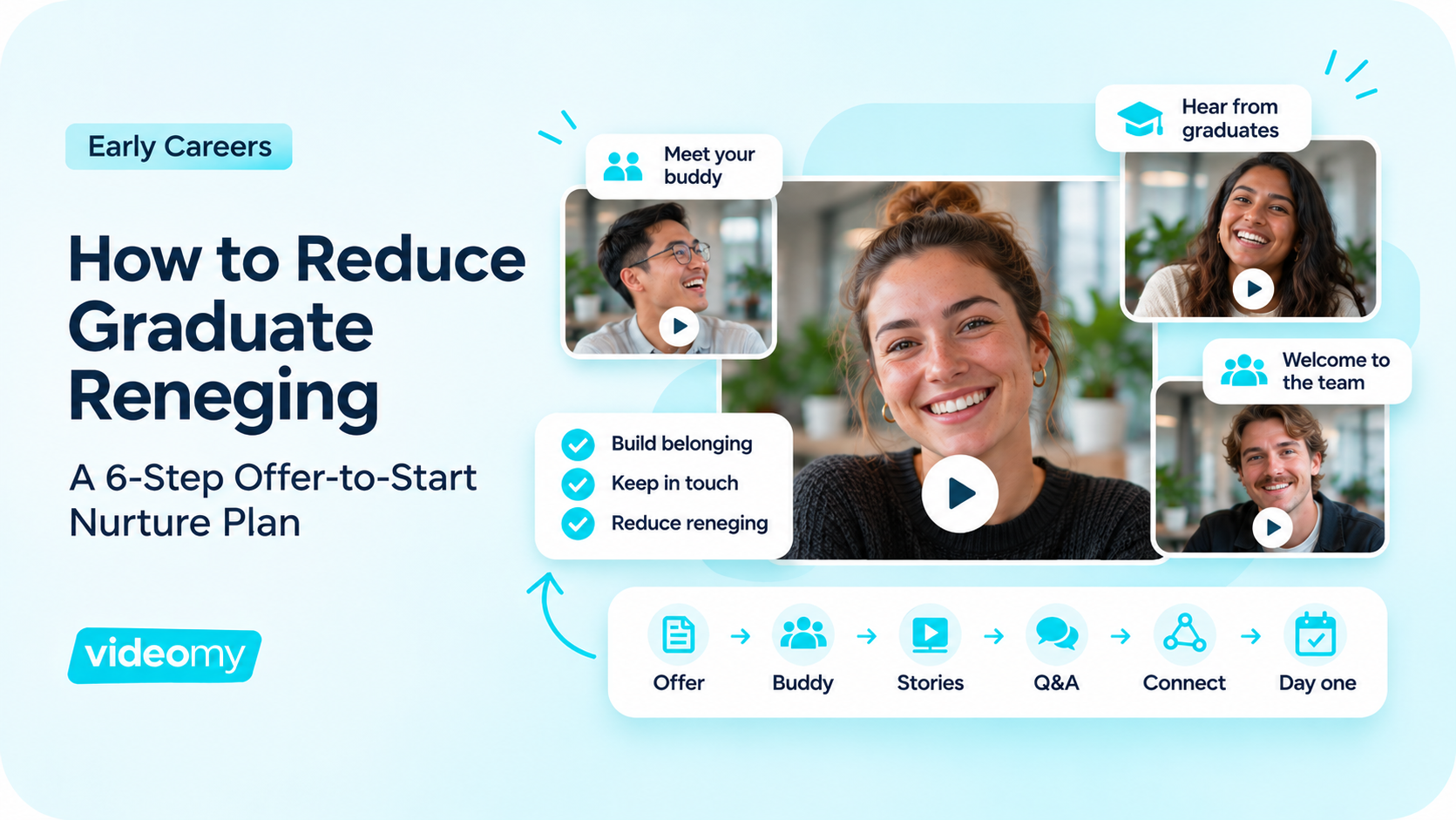
The most effective way to reduce graduate reneging is to keep incoming graduates emotionally invested between offer and day one, with regular, personal contact from the people they will actually work with.
In Australia and New Zealand that gap is long. Offers typically go out mid-year and programs start the following February, so graduates can spend six months or more holding your offer while competitors keep talking to them. Reneging happens when that connection fades.
This guide explains why graduates renege, the warning signs to watch for, and a six-step nurture plan (with a month-by-month calendar) you can start using with your current intake today.
What is graduate reneging?
Reneging is when a graduate accepts a job offer and then withdraws before they start, usually because they have accepted another offer or had second thoughts.
It is one of the most expensive problems in early careers as you have already paid to attract, assess and select that graduate. When they pull out late, the role is often too close to the start date to refill from the same pool, and the rest of the cohort notices.
How common is graduate reneging?
In the UK, the Institute of Student Employers (ISE) puts the renege rate at 7% over the last couple of years, and reports that internship reneges have sometimes doubled year on year.
Across all candidates (not just graduates), the trend is clear:
- Gartner research, including candidates in Australia and New Zealand, found that 50% of respondents had accepted a job offer and then backed out before starting in the previous 12 months. Of those who had recently accepted an offer, 47% said they remained open to other offers.
- Robert Half found that 61% of Australian employers have seen an increase in candidates accepting and then declining before their start date.
The Australian Association of Graduate Employers (AAGE) now asks incoming graduates specifically about offer acceptance and why candidates renege in its annual Candidate Survey, a sign of how seriously employers are taking the issue.
Why do graduates renege on offers?
Graduates rarely renege on a whim. The usual causes are:
- A long, silent gap. Months pass between acceptance and start with little more than a contract and a welcome pack. The emotional connection built during assessment fades.
- Competing offers. Many graduates apply widely and receive multiple offers, sometimes after they have already accepted yours.
- Doubts creeping in. Without regular contact, small worries (location, team, rotation, whether they will fit in) grow into reasons to look elsewhere.
- A mismatch they discover late. If what they hear from friends or online doesn't match what you promised, trust drops quickly.
- No sense of belonging. Graduates who don't know anyone in the business yet have very little to lose by walking away.
Most of these causes have the same fix: more human contact, more often, from the right people.
What are the warning signs a graduate might renege?
- Slow or no replies to emails and calls.
- Not opening or watching nurture content.
- Skipping virtual or in-person events.
- Not joining the cohort's group chat, Teams channel or preboarding platform.
- Repeated questions about start dates, locations or deferral.
ISE notes that employers are now tracking engagement with preboarding platforms and groups, and treating low participation as an early warning sign. If you can see who is watching your content, you can see who needs a personal call.
The 6-step offer-to-start nurture plan
Step 1: Make the offer moment personal
The offer is the emotional high point of the process. Don't waste it on a PDF. A short video from the graduate's future manager, buddy or program lead congratulating them by name makes them feel chosen, and it is the first proof that your culture is what you said it was.
ISE lists making the offer moment personal as the first tactic employers are using to beat reneges, alongside welcome events and shareable graphics graduates can post themselves.
Step 2: Give every graduate a familiar face
Introduce each graduate to a buddy and a single point of contact as early as possible, ideally on video before they meet in person. Most large programs already provide this: AAGE research found 92% of employers allocate graduates a buddy and 70% provide a formal mentor. The opportunity is to introduce those people months earlier, not on day one.
Step 3: Keep in touch every three to four weeks
Plan a steady rhythm of touchpoints from offer to start, rather than a burst at the beginning and a welcome email the week before. Short videos work well because graduates can watch them on their phones in a minute or two, and you can see who has engaged.
Robert Half's research shows the most popular tactics for keeping new hires engaged before they start are introducing them to the team socially (58%), regular phone or email contact (56%) and sending a welcome pack (51%). Video lets you do the first two at scale.
Step 4: Let current graduates do the talking
Incoming graduates trust their peers far more than they trust corporate messages. Ask your current cohort to share what their first weeks were really like, what they wish they had known, and what they are working on now. Peer stories reassure in a way a program brochure can't.
Step 5: Answer the worries before they become doubts
Graduates have practical questions they often won't ask: what to wear, how to get there, when they get paid, what happens in week one, how rotations are chosen. Short FAQ videos from HR, program leads and current grads remove the uncertainty that turns into second thoughts.
Be transparent, too. ISE highlights being upfront about locations and specific roles, and re-checking commitment early, so surprises don't surface in January.
Step 6: Build the cohort before day one
People are less likely to walk away from a group they already belong to. Create a space for the incoming cohort to meet each other (a Teams channel, a LinkedIn group or a preboarding platform), host a social event or office visit, and share content that makes them feel like part of the team already.
This has benefits beyond reneging. MUFG Retirement Solutions used employee and leader videos across recruitment, onboarding and internal comms, and reduced early attrition in its contact centres from 60% to 21%. Setting expectations early pays off long after the start date.
A month-by-month offer-to-start calendar
Adapt this to your own offer and start dates. It assumes offers go out in June or July and the program starts in February.
- Offer week: personalised congratulations video from the manager or program lead. Share the "what happens next" timeline.
- Month 1: buddy introduction video. Invite graduates to the cohort group.
- Month 2: Meet-the-Grads video from the current cohort: what the first months were really like.
- Month 3: day-in-the-life content for their stream or rotation. Virtual Q&A with current graduates.
- Month 4: leader welcome message explaining why the program matters to the business. In-person or virtual social event.
- Month 5: practical FAQ videos (first week, location, pay, equipment). Check in personally with anyone who hasn't engaged.
- Month 6 (December/January): countdown content, team welcome videos and a clear day-one plan. This is a high-risk window, as late offers from other employers land over summer.
- Start week: welcome from the team on day one, and capture the new cohort's first impressions for next year's nurture series.
What content works best for graduate nurture?
- Personal welcome videos from managers and buddies.
- Meet-the-Grads stories from the current and previous cohorts.
- Day-in-the-life snapshots for each stream or rotation.
- Leader messages that explain the purpose of the program.
- FAQ and "what to expect" videos for the practical questions.
- Cohort content, such as event highlights and introductions to fellow graduates.
Keep videos short (30-90 seconds), filmed on phones by real people, and captioned so they can be watched anywhere. Polish matters far less than warmth and honesty.
How do you measure whether nurture is working?
- Reneging rate by stream, location and source, compared with previous years.
- Engagement with nurture content: who is opening, watching and replying.
- Event attendance and participation in cohort groups.
- Start rate: the share of accepted offers that turn into day-one starters.
- Early retention in the first 6-12 months.
- Exit reasons: ask everyone who reneges why, and feed it into next season.
How VideoMy helps early careers teams reduce reneging
VideoMy makes it easy to build an offer-to-start nurture series without a production team. Current graduates, buddies, managers and program leaders record short videos from their phone or laptop using guided prompts, and every video is branded and edited automatically. Content can be shared in emails, cohort groups and a Story Feed, with analytics showing who is engaging.
Graduate teams already use VideoMy to stand out during attraction. Westpac's early talent content delivered a 58.2% increase in applications per session and an 82.5% positive candidate experience score. The same approach keeps graduates connected once they have said yes. Learn more about VideoMy for early careers.
Book a demo with the team to see how it works.
For the full annual cycle, from attraction to day one, see our Graduate Recruitment Marketing Playbook (ANZ).
Frequently asked questions
What does reneging mean in graduate recruitment?
Reneging is when a graduate accepts a job offer and then withdraws before starting, usually to accept another offer or because they have changed their mind.
What is a typical graduate renege rate?
In the UK, the Institute of Student Employers reports a renege rate of around 7%. Rates vary by sector and employer, so the best benchmark is your own rate over previous seasons.
When are graduates most likely to renege?
Risk is highest during long periods without contact and when competing offers land. In ANZ, the months between a mid-year offer and a February start, especially over summer, are the most vulnerable.
How often should we contact graduates before they start?
Every three to four weeks is a good rhythm. Mix short videos, events and personal check-ins so contact feels genuine rather than automated.
Can you prevent reneging completely?
No, some graduates will always change their minds. But regular, personal contact, a strong sense of belonging and honest information reduce the risk significantly, and help you spot who needs extra attention early.
Sources
- Institute of Student Employers: Here's how employers are actually beating reneges (August 2025)
- Gartner HR survey finds 50% of candidates backed out of a job offer after accepting (August 2023)
- Robert Half Australia: Accepting a job no longer a guarantee to secure talent (September 2022)
- AAGE: Graduate programs remain critical to Australia's future workforce (September 2026)
- AAGE: Candidate Survey
- VideoMy customer story: MUFG Retirement Solutions
- VideoMy customer story: Westpac