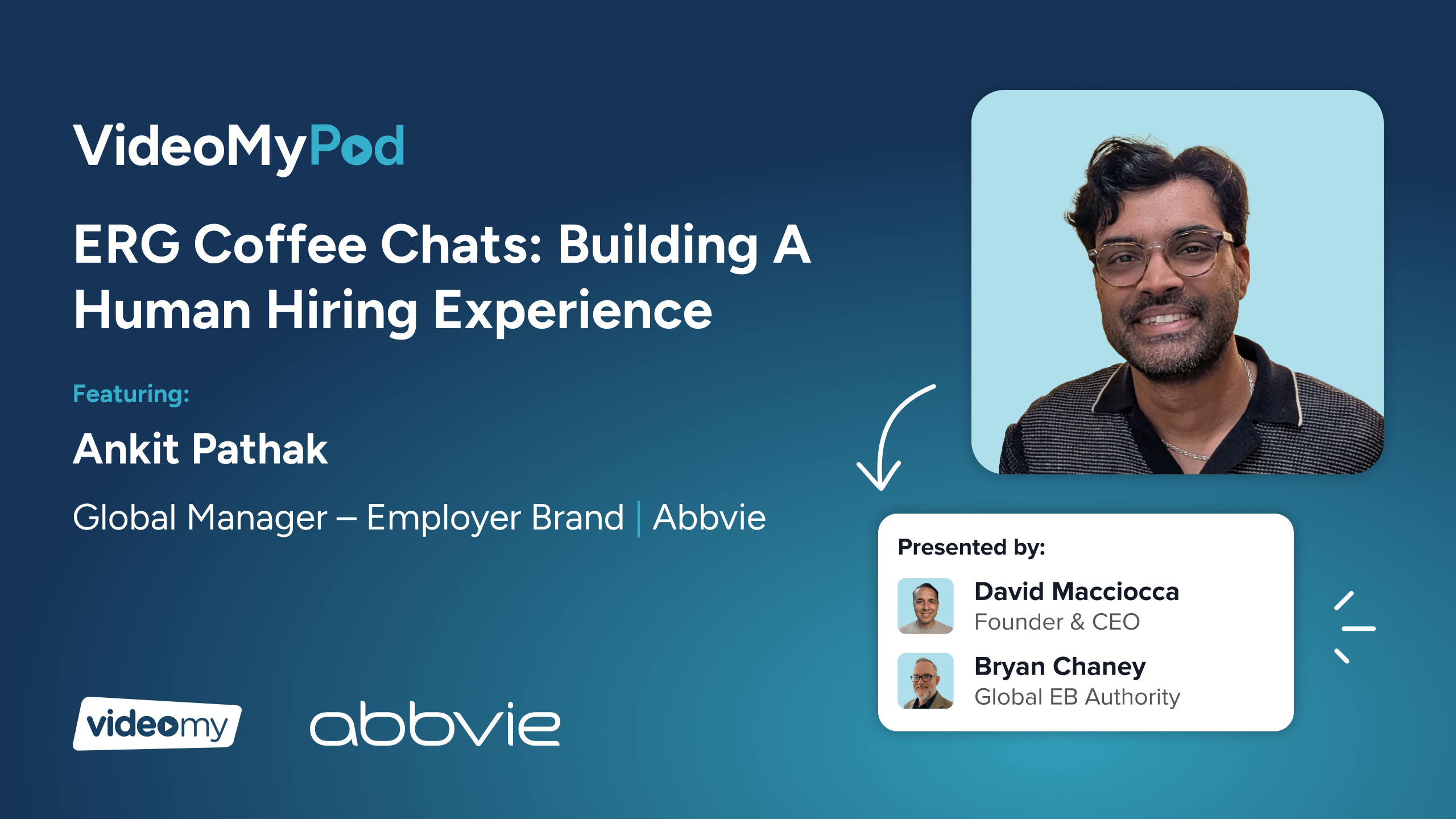
Building ERGs, Ambassador Programs and a Culture of Belonging with Courtney Zehnder (RS Americas)


Courtney Zehnder has spent around 15 years in marketing and branding. Like many people in the field, she found her way to employer brand by accident, after realising that "products are great, people are better." On the latest VideoMy Pod ep, she explained how she built ambassador and employee resource group (ERG) programs from nothing, and how she measures whether they work.
Measure the Slow Build
Courtney is clear that an ambassador program isn't a quick fix. "It's a slow build," she says. "It's momentum over time." The momentum showed up in the numbers. Over about three years, her company's offer acceptance rate rose by double-digit percentages, voluntary turnover fell and engagement scores went up.
New hires told the team why they joined. "We would ask them when they started, how did you find out about us? And it was the content that we were putting out around our people."
Disappear Behind the Work
Courtney's passion is making employees feel seen. "When our people feel seen, it's like a different type of recognition that maybe they wouldn't necessarily get," she says. One of her favourite stories came out of Hispanic Heritage Month, when she discovered a colleague who played in a travelling mariachi band. He played his guitar for her on camera. "There's so much depth to people," she says. "If you're not asking the questions, you're never going to find out what people's stories are."
She believes the work requires stepping out of the spotlight. "If you're making it too much about yourself, then you might be in the wrong field. This is about uplifting employees."
Going From Zero to One
When Courtney started, the company had no ERGs in the US. She and three colleagues formed an unofficial group to get them started, and she chaired the women's group for three years. To find leaders, she looked for people with leadership qualities who weren't yet managers and offered them a playbook and support.
That group has grown to more than 200 members, about 40% of the women at the company. Each ERG now has an executive sponsor, and the company president meets regularly with the chairs. The groups also have committee roles for marketing, membership, remote staff and warehouse employees, so people outside head office aren't left out.
Put It on the Calendar
Courtney learned that putting news "everywhere" still isn't enough. "I have posted everything everywhere and then people be like, I didn't know about this." To cut down on competing events, one ERG now "owns" each month. That group's event is the only one added to everyone's calendar as an optional hold.
The result was a 50% jump in attendance. It started with a simple 15-minute walk during Mental Health Awareness Month.
Ambassadors vs Spokespeople
Courtney sees a difference between the two. Ambassadors are "your boots on the ground, they're doing all the work," while spokespeople are the confident voices who don't mind talking to anyone. Part of her job is finding the quiet ambassadors and recognising them.
When an ambassador shares something true but uncomfortable for leadership, her advice is to listen without getting defensive, share it with the people business partners and watch for patterns.
Bridging Internal and External
Courtney now works across employer brand and internal comms, which she says makes time management the hardest part. It also means employees hear news before the outside world does. Teams that once needed persuading now come to her. As she puts it, she has gone from begging for stories to "an influx" of them.
🎥 Watch on YouTube
🎧 Listen on Spotify